
AP30
Active self-pressurized
≈ 6–7 m³/min · ≈ 60 min
Small rooms, ISO suites and localized barrier-enclosure work
Technical guidance for active self-pressurized and passive dewar-style AP Series foggers, cleanroom smoke studies, cryogenic safety and evidence-ready airflow visualization.
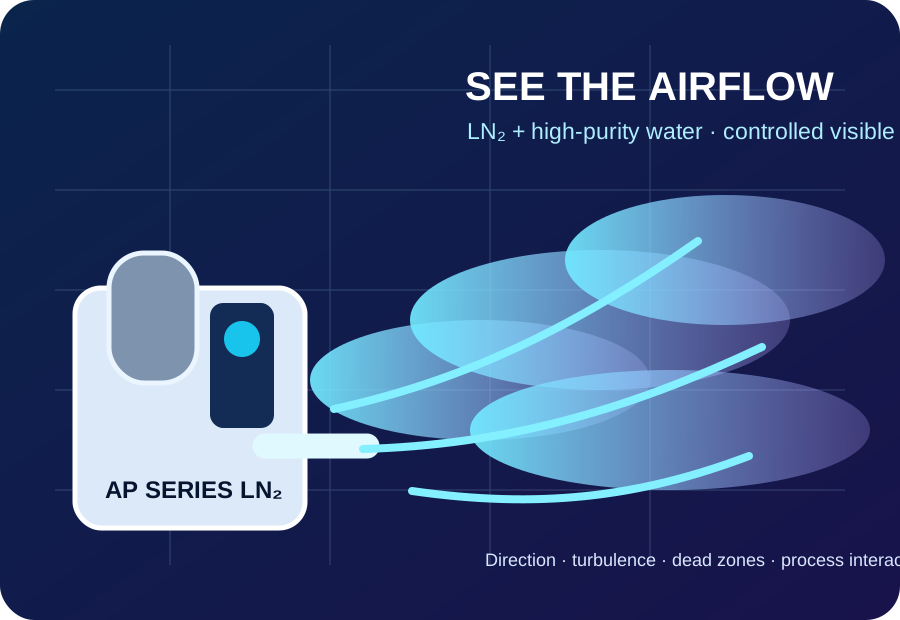
Fog makes direction and turbulence visible. Quantitative conclusions still require the applicable instruments and method.
The AP Series is not one linear product ladder. Active self-pressurized and passive dewar systems create different operating workflows. The correct shortlist starts with how the site will receive, transfer, control, service and qualify LN₂ fog—not with the largest output figure.
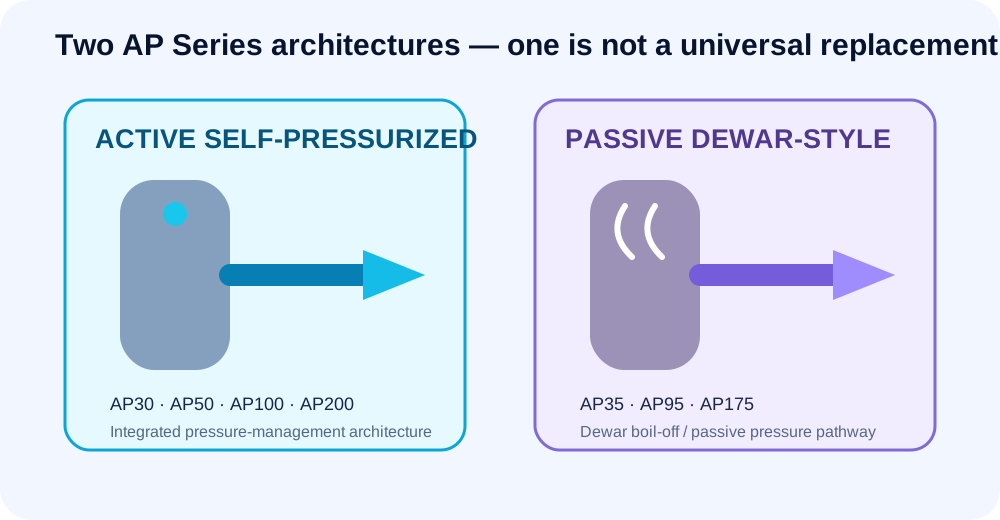
Active self-pressurized
≈ 6–7 m³/min · ≈ 60 min
Small rooms, ISO suites and localized barrier-enclosure work
Passive dewar-style
≈ 5.5–6.5 m³/min current summary · ≈ 70 min
Small-to-medium rooms and teams that prefer a passive dewar pathway
Active self-pressurized
≈ 10–12 m³/min · ≈ 75 min
Medium rooms and applications requiring more active-system output than AP30
Passive dewar-style
≈ 19–20 m³/min · ≈ 85–95 min
Medium-to-large rooms requiring a higher-output passive dewar pathway
Active self-pressurized
≈ 20–21 m³/min current summary · ≈ 90 min
Large rooms and active-system projects requiring sustained high output
Passive dewar-style
≈ 27–29 m³/min · ≈ 95–110 min
Large environments where a high-output passive dewar architecture is preferred
Active self-pressurized
≈ 40–42 m³/min current summary · ≈ 100–110 min
Very large rooms, broad mapping and projects requiring maximum active-system output
Qualitative airflow visualization inside a controlled, documented cleanroom test method.
Plan the method →Representative equipment, materials, operator positions and interventions—not an empty-room demonstration.
Build the evidence →Sterile compounding and hazardous-drug environments require facility-controlled procedures and containment logic.
Review USP pathways →Connect airflow evidence to the contamination-control strategy and representative operations.
Review Annex 1 →Screen architecture, output and application scope while preserving qualification gates.
Use selector →Compare geometric room volume with published output without pretending it predicts validated coverage.
Calculate ratio →Estimate multi-cycle inventory and reserve while exposing logistics and ODH dependencies.
Plan supply →Structure representative conditions, interventions, video, acceptance and safety.
Build brief →UltrapureFogger.com is owned and published by Applied Physics Corporation. Its job is to earn search visibility and trust by being more technically useful than a product catalog, then route qualified buyers into the correct AP product and engineering conversation. Ownership is explicit in visible copy, schema, contact data and attribution.
Current AP product pathways, model taxonomy and technical sales access.
The resource can answer a technical question even when the visitor is not ready to request a quote.
Source-site, source-page, UTM and data-layer events connect content to qualified opportunity and revenue.
Send the room, operating state, architecture preference, fog-entry method, LN₂ logistics, utilities, accessories, safety and documentation requirements.